 Brain Train
Wideye: how fast can you see the whole picture?
One flash. Name the middle, then point to the edge.
Wideye trains useful field of view — how much you can take in at a glance, and how quickly. It's the same visual skill behind noticing something at the edge of your vision or reacting before you've had time to think. Most brain games test how well you remember. Wideye tests how fast you see.
▶ Play Wideye on Google PlayWhat "useful field of view" actually means
Your eyes take in almost everything in front of you, but your brain doesn't process all of it — attention narrows to a smaller window than your eyes actually cover, and that window changes size and speed from person to person. That's your useful field of view: not how wide you can physically see, but how much of what you see you can actually use in the moment. Researchers have studied it for decades as a measure of visual attention and processing speed.
How Wideye trains it
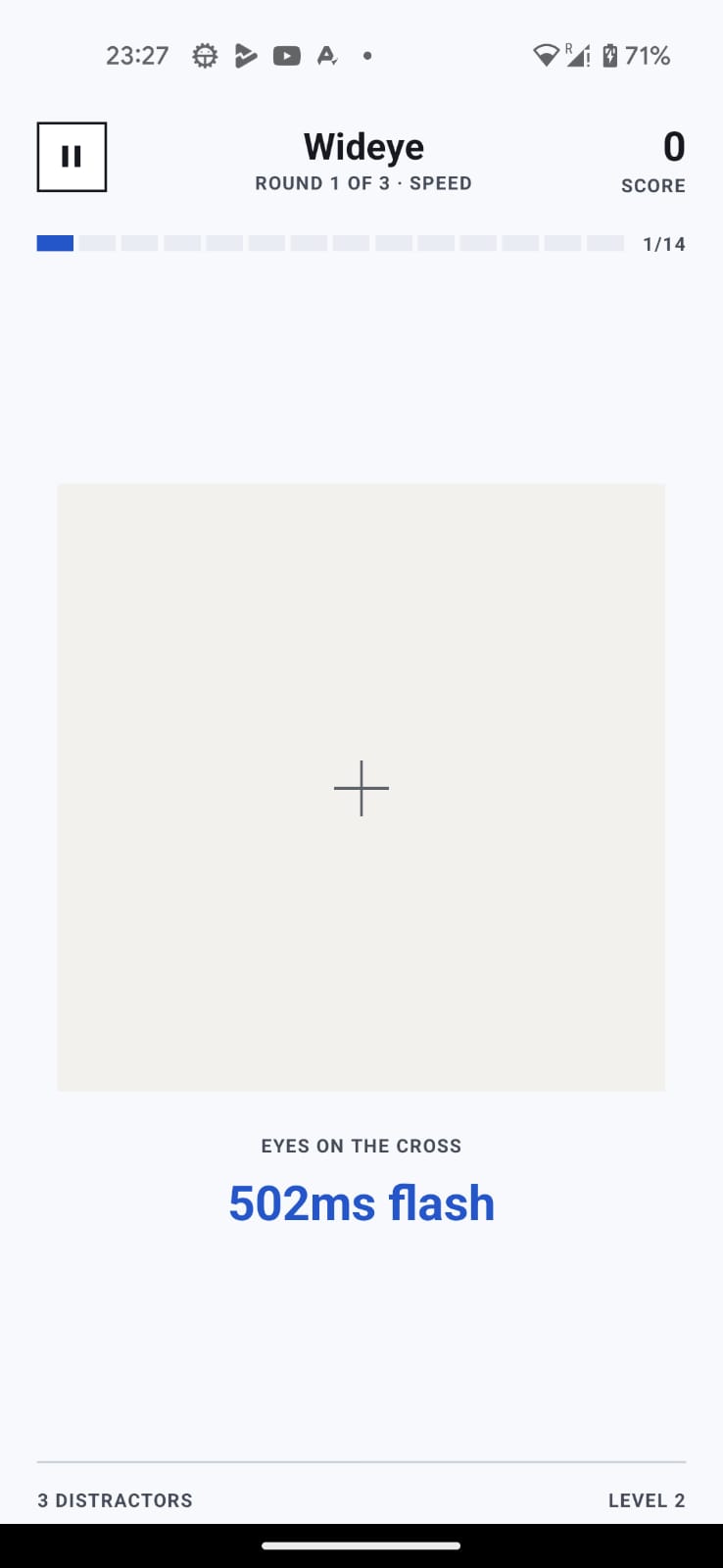
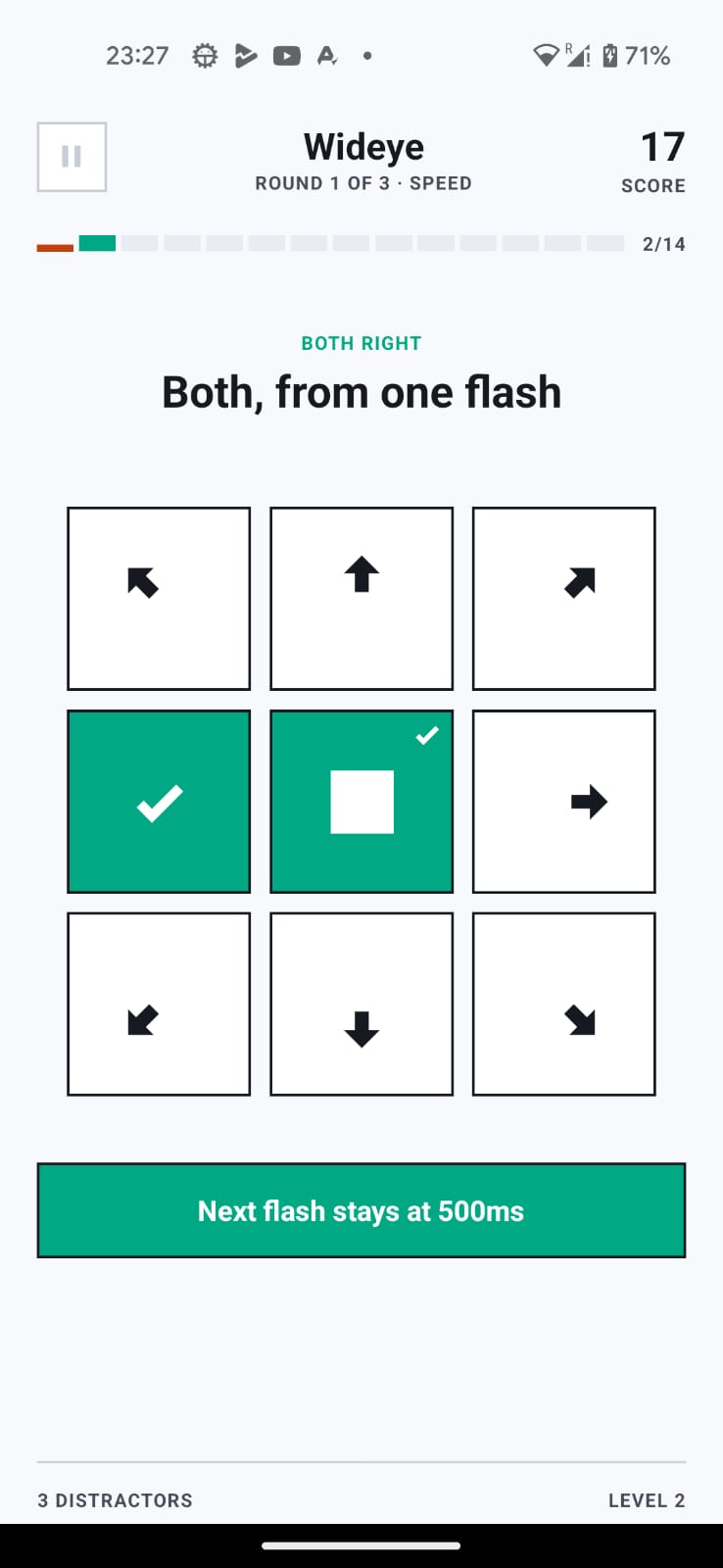
A shape flashes at the center of the screen and a mark flashes out at the edge — both at once, for a fraction of a second. Name the shape, then point to where the mark was. That's it. No pattern to remember, no sequence to plan — just: what did you see, and where.
The game finds your edge automatically. Answer right and the flash gets shorter; miss and it gets a little longer, so the length keeps testing exactly what you can handle right now. The number Wideye shows you is a duration, and shorter is better — a shrinking window means you're taking in more, faster.
Why it's not like your other brain training
Every other skill in Brain Train is a game you get better at over sessions. Wideye works the same way, but what it measures is different: it's the one skill here that's about the width and speed of attention itself, not about remembering, sorting, or switching between rules.
Questions about Wideye
Is useful field of view the same as peripheral vision?
Not exactly. Peripheral vision is about what your eyes physically see; useful field of view is about what your brain can actually process from that in the moment. You can have fine eyesight and still have a narrow useful field of view under time pressure — which is what Wideye measures.
Why does a shorter time mean a better score?
Because the number is how long the flash needs to stay on screen for you to catch it. The faster you can take it in, the shorter that window gets — so unlike a score that goes up, Wideye's number is one you're trying to bring down.