 Brain Train
Inkblind: tap the colour, not the word
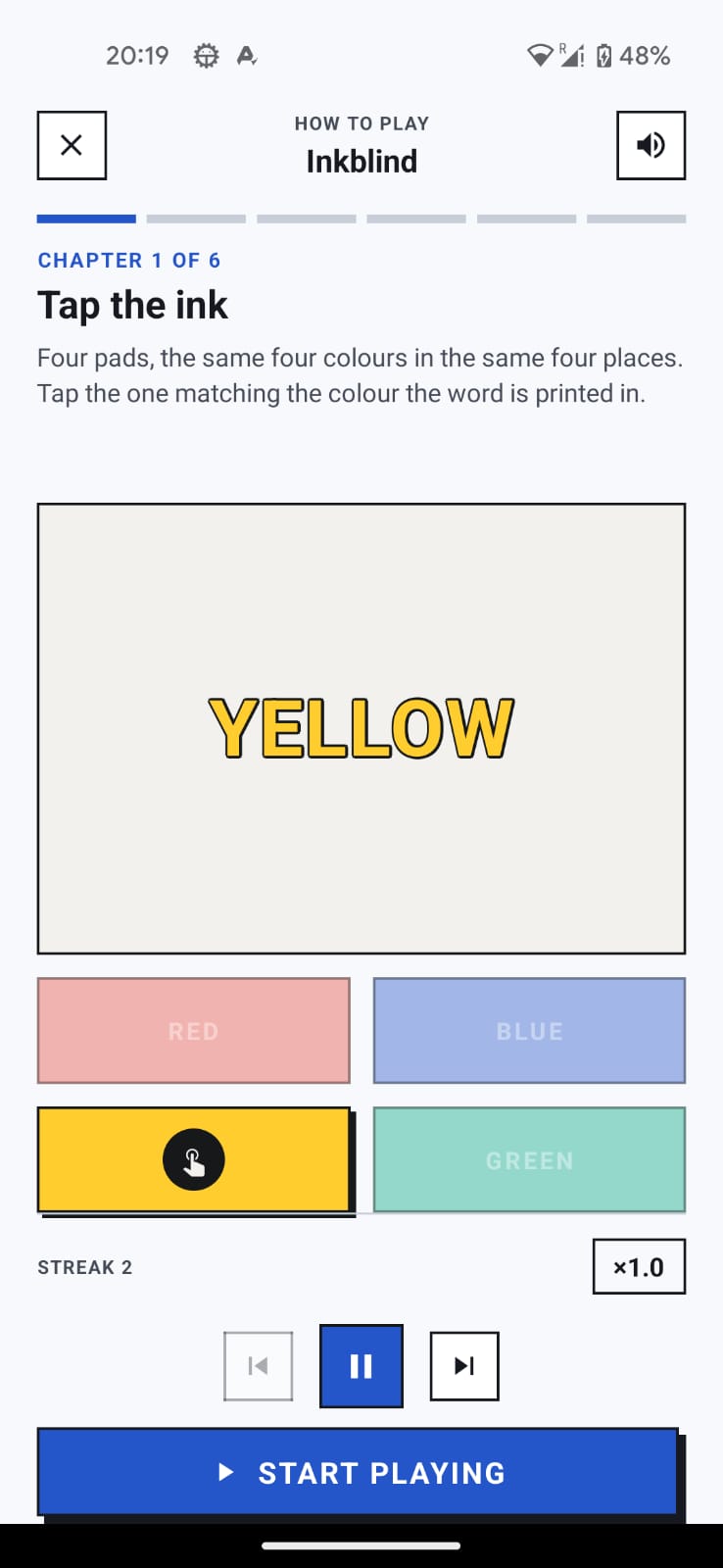
Tap the colour you see, not the word you read.
The word above says RED, printed in blue. Your brain wants to read it before it lets you see it. Inkblind is built on the Stroop effect — one of psychology's oldest and most reliable tests of attention — turned into a fast, repeatable game instead of a lab exercise.
▶ Play Inkblind on Google PlayWhat the Stroop effect actually is
In 1935, psychologist John Ridley Stroop found something almost everyone still does today: reading a word is so automatic that it interferes with a different task, like naming the color it's printed in. Say the word "RED" printed in blue ink, and most people hesitate — the brain reads the word before it reports the color, even when the task is only ever about the color. That gap, and how consistently people can close it under pressure, is one of the most-used measures of attention and interference control in psychology.
How Inkblind trains it
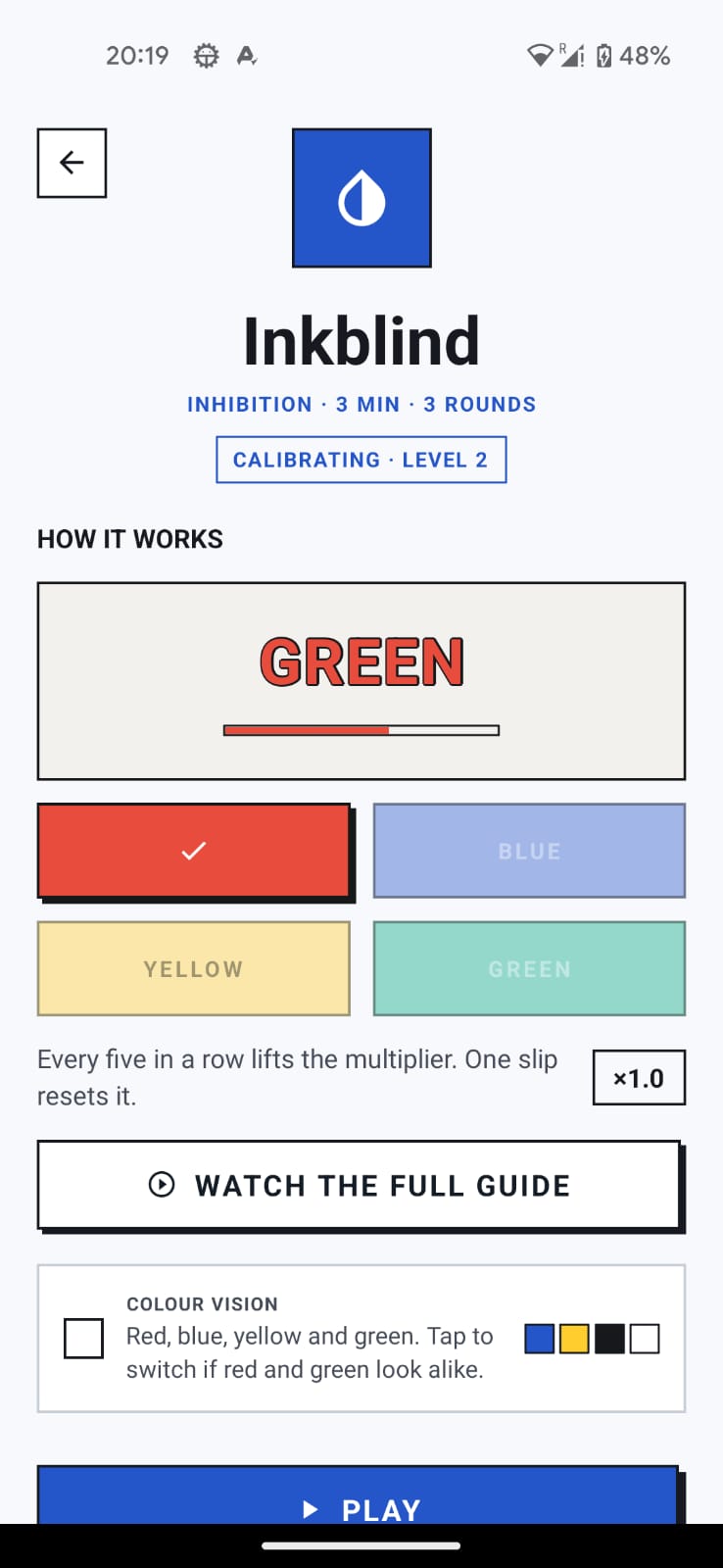
A word arrives, printed in a color that doesn't match what it says. You tap the color you see — not the word you read. It sounds simple until the round speeds up and the automatic answer (just read the word) keeps trying to win. Every round is the same fight: what your eyes are actually seeing versus what your brain wants to shortcut to.
Why it's not like your other brain training
Most games here ask you to remember something or act on a rule. Inkblind asks you to ignore something — the word itself — while still using the information right next to it. That's a different muscle: filtering out a distraction that's fighting for the same attention as the thing you actually need.
Questions about Inkblind
What is the Stroop effect?
It's the delay that happens when you're asked to name the color of a word whose meaning names a different color — like the word "RED" printed in blue ink. Reading the word is so automatic it interferes with the color-naming task, even though the task never asked you to read anything.
Why is it hard to just ignore the word?
Because reading is overlearned — your brain does it faster and more automatically than almost anything else you do with your eyes. Inkblind doesn't ask you to read slower; it asks you to notice which channel (word vs. color) you're actually answering from, round after round.
Does Inkblind get easier the more you play?
The task itself never changes — it's always color versus word. What changes is how consistently you can answer from the right channel under time pressure, which is the whole point of practicing it.