 Brain Train
Sequence: tap the numbers in order before the clock does
Tap the numbers lowest to highest, before the clock does.
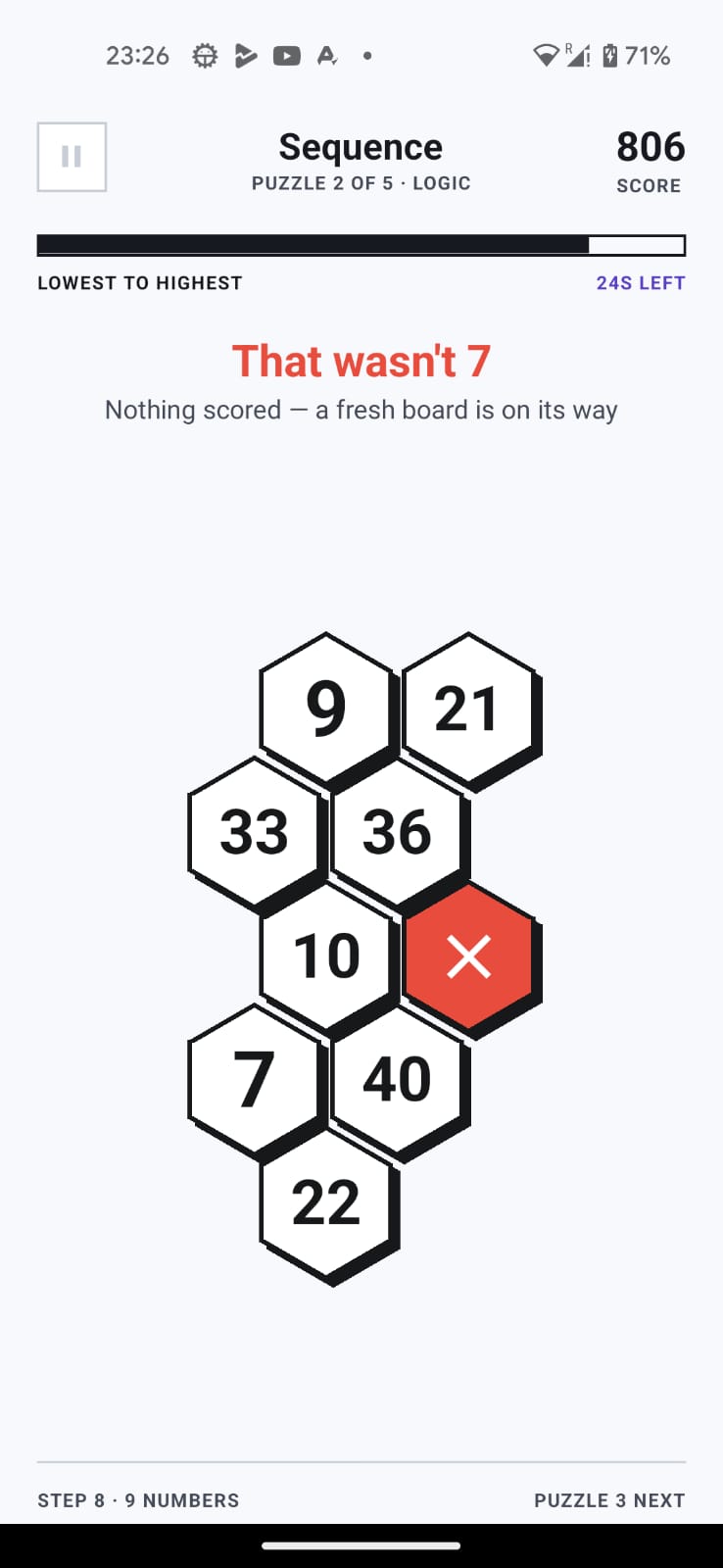
Numbered hexagons land scattered across the screen — and the numbers skip: 1, 3, 8, 9, 13. You tap them lowest to highest. One out of order and the round is over. No calculation, just holding the order in mind while your eyes are still searching for the next one.
▶ Play Sequence on Google Play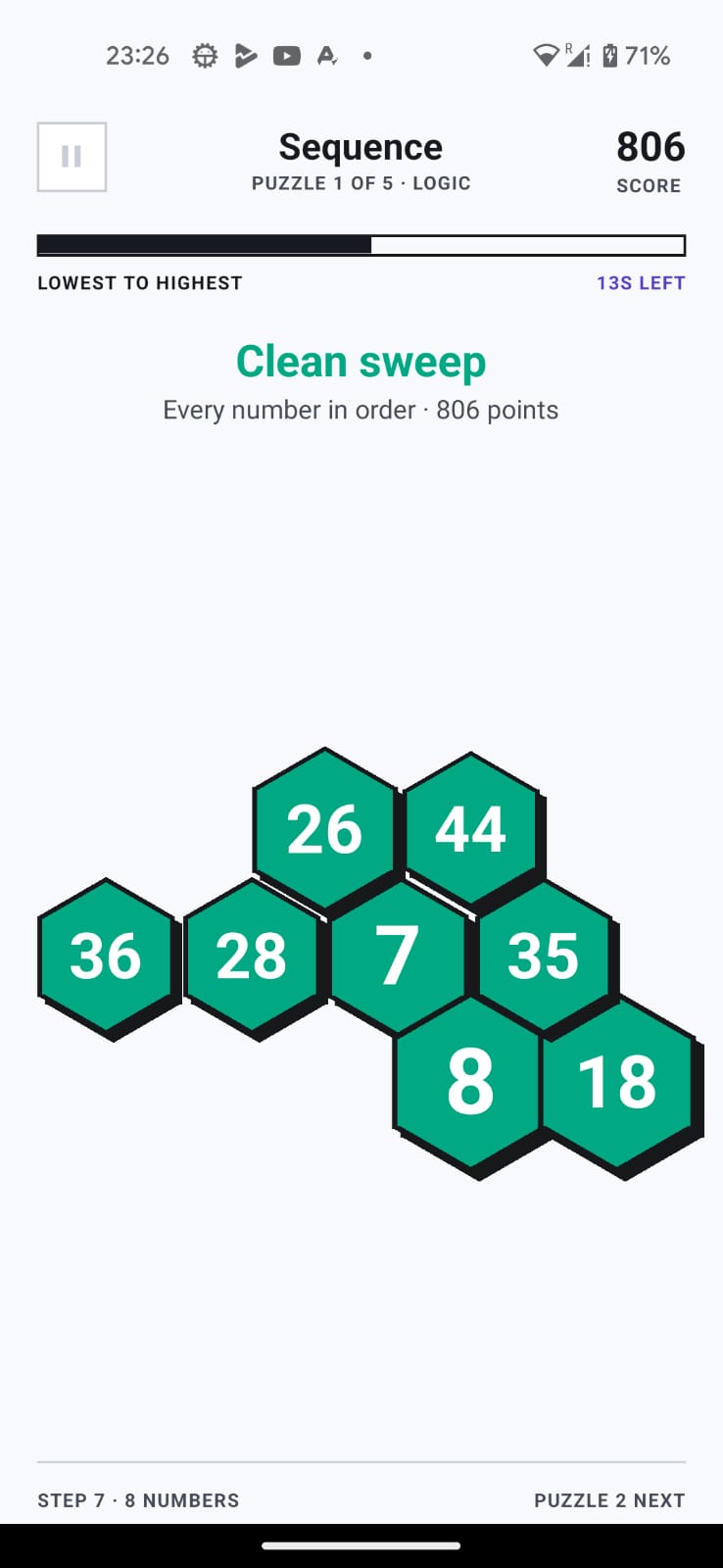
Why the numbers skip instead of counting normally
If the numbers ran 1, 2, 3, 4… you could tap by pattern-matching the smallest digit on screen without really tracking the sequence. Skipping — 1, 3, 8, 9, 13 — removes that shortcut: you have to actually know the full order in your head, not just spot "the next lowest-looking number."
How Sequence trains it
The hexagons land in random positions the moment the round starts, so there's no layout to memorize ahead of time — you're scanning a cluttered field, holding the correct order in mind, and acting on it under a visible clock. Get one tap wrong and the puzzle ends immediately; there's no partial credit for a sequence broken halfway through.
Why it's not like your other brain training
Most games here isolate one skill cleanly. Sequence deliberately layers three at once — visual search (finding the numbers), working memory (holding the order), and time pressure (the clock) — because that combination, not any one of them alone, is closer to how attention actually gets stretched in daily life.
Questions about Sequence
Why do the numbers skip instead of going 1, 2, 3…?
Because consecutive numbers let you cheat by just finding the visually smallest digit on screen. Skipping forces you to actually hold the true order in mind rather than pattern-match your way through it.
What happens if I tap a number out of order?
The puzzle ends immediately — there's no partial credit for a sequence broken partway through, which is what keeps the whole task about holding the order, not just getting most of it right.