 Brain Train
Echo: was this the same cell as two ago?
Was this the same cell as two ago?
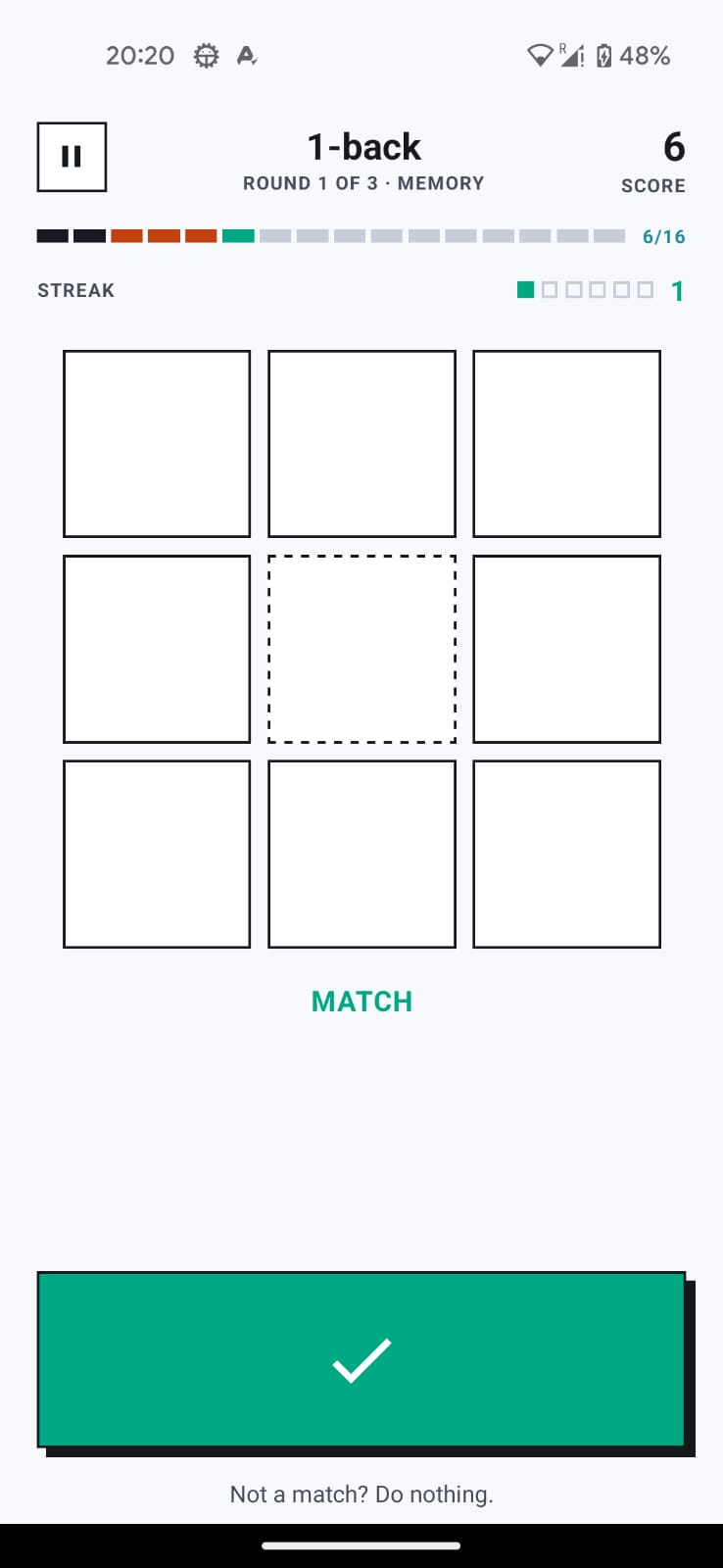
A mark moves around a nine-cell grid. Every time it lands, you decide: is this the same cell it was in two moves back? Echo is built on the n-back task — one of the most widely used working memory tests in cognitive psychology — turned into a fast, repeatable game.
▶ Play Echo on Google Play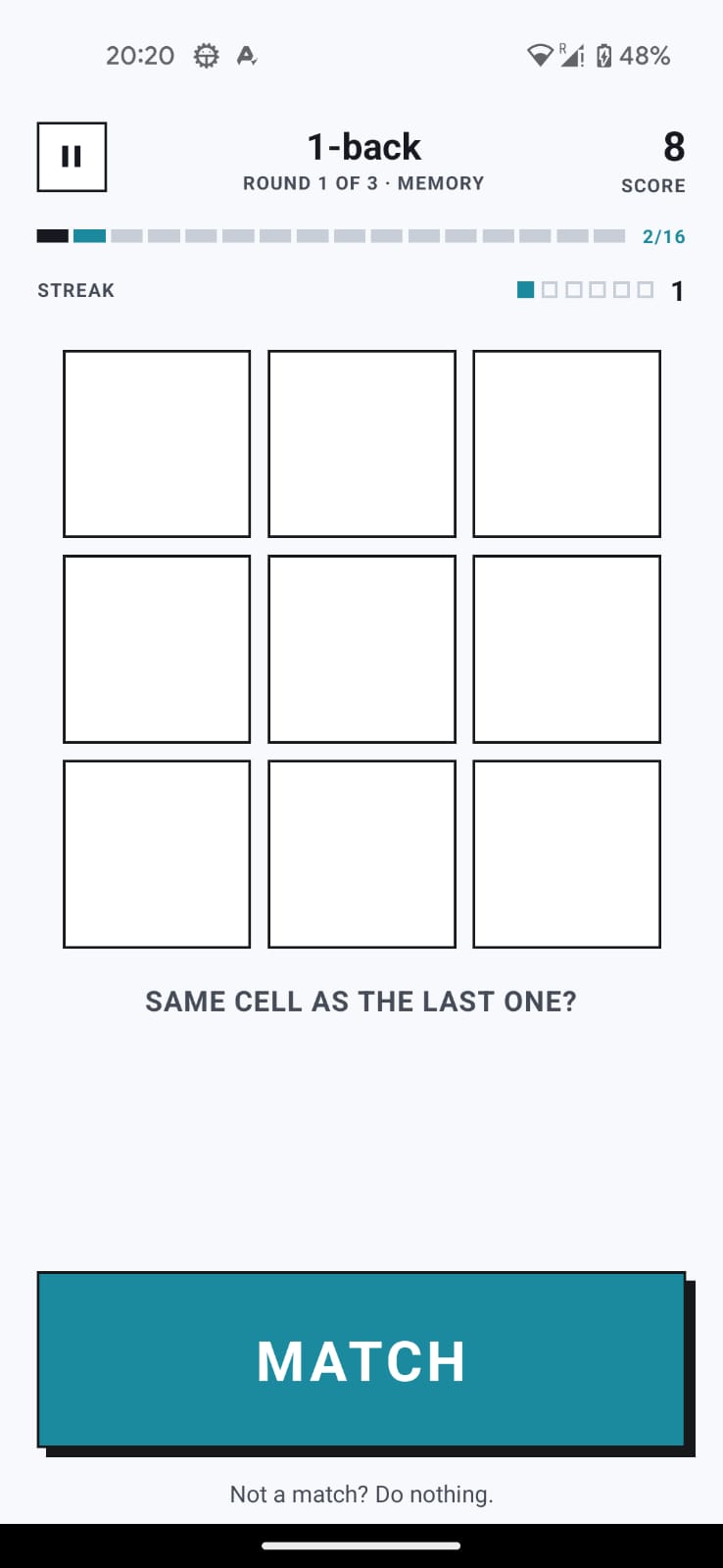
What an "n-back" task actually is
Ask someone to remember one thing and they can hold it easily. Ask them to keep updating that memory — replacing the old item with a new one every few seconds, while still being able to say what came before — and it gets much harder. That updating-under-load is what the n-back task measures, and it's been used to study working memory since the 1950s. "2-back" means comparing against what happened two steps ago, rather than just the last one.
How Echo trains it
A mark moves around a nine-cell grid, one cell at a time. Each time it lands, you tap Match if it's the same cell it was in two moves ago — or let it pass if it isn't. There's no pattern to memorize ahead of time; you're always holding the last few positions in mind and comparing against the newest one.
Why it's not like your other brain training
Lattice, Echo's closest neighbor in the memory category, asks you to hold a snapshot in mind and recall it once it's gone. Echo never lets the picture settle — it's a moving target, and the memory you're testing is constantly being updated and overwritten. That's a different kind of working memory: not "remember this," but "keep this current."
Questions about Echo
What is an n-back task?
It's a working memory test where you're shown a stream of items and asked whether each new one matches the one from n steps earlier. Echo uses a moving mark on a grid instead of letters or sounds, but the underlying task is the same paradigm researchers have used for decades.
Does the "n" in Echo ever change?
The game adjusts how far back you need to remember as you improve, the same way every game here finds the difficulty that keeps testing what you can actually handle.