 Brain Train
Tally Rush: two values flash — tap the bigger one
Two values flash — tap the bigger one.
Two numbers appear side by side for a moment. You tap whichever is bigger. That's the whole game — and the instruction that actually matters is the one most people ignore at first: estimate, don't calculate.
▶ Play Tally Rush on Google Play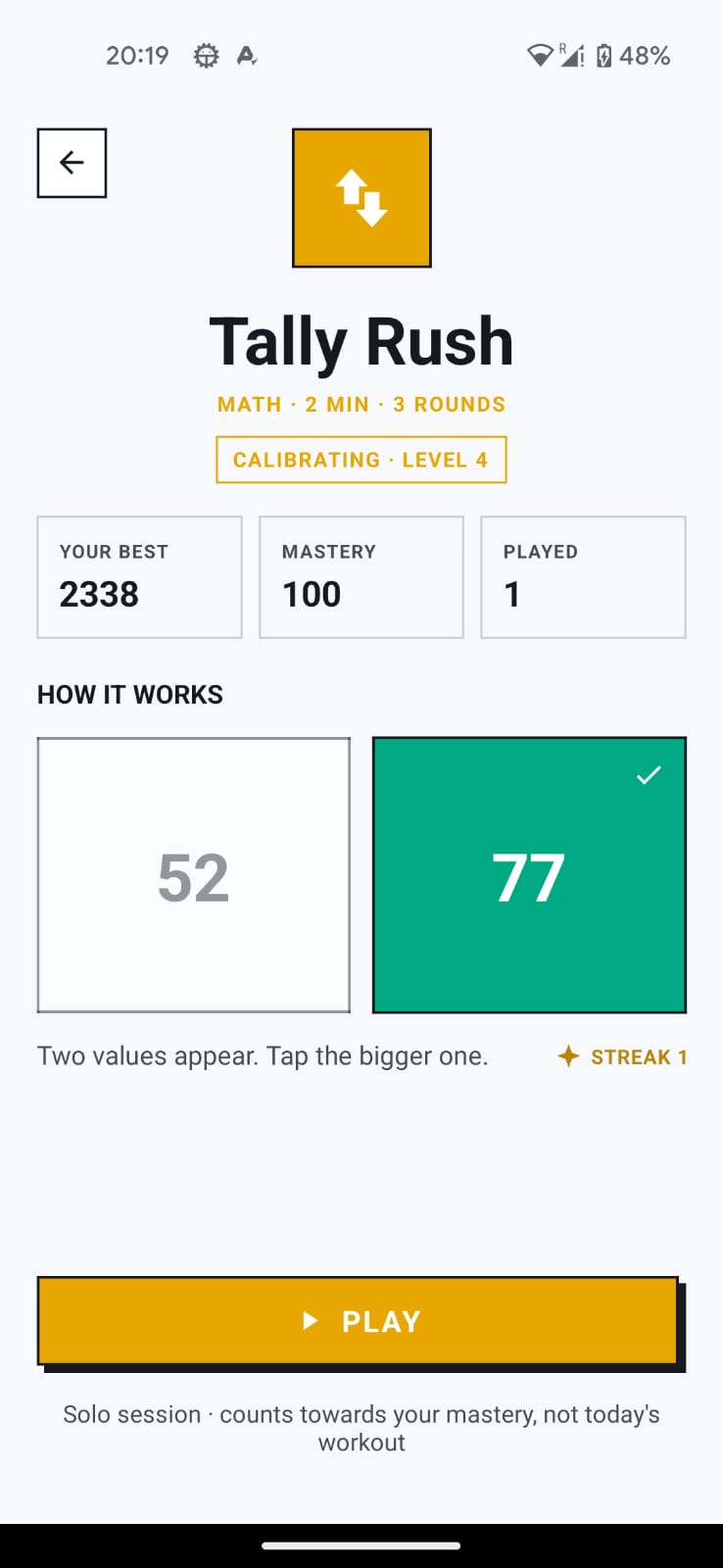
Why "estimate, don't calculate" is the actual point
This isn't an arithmetic drill. The values flash for long enough to size up, not long enough to add up — so the skill being tested is quick magnitude judgment: a fast, rough sense of "which is more," the same kind of instant estimate you use glancing at two lines at a store or two piles of anything without counting either one.
How Tally Rush trains it
Two values appear at once. Tap the bigger one before they're gone. As you improve, the values get closer together and the window gets shorter — so the game keeps finding the point where a glance isn't quite enough and you have to trust your first read.
Why it's not like your other brain training
Every other game here gives you a beat to think. Tally Rush is built around not having one — the moment you start actually calculating, you've already lost the round. It's the fastest, most reflexive game in the lineup on purpose.
Questions about Tally Rush
Is this really math, or something else?
It looks like math but it's closer to a reflex: comparing two quantities at a glance rather than computing an answer. The values are shown too briefly to calculate on purpose.
Why does "estimate, don't calculate" matter?
Because trying to calculate exactly is slower than the window allows — the game is testing how good your instant read is, not whether you can do arithmetic under pressure.